

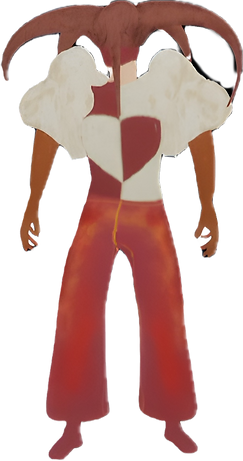
Last Dance is an online PVP game now available for purchase on Steam! I developed the game in Unreal 5.6 (C++ / Blueprints) and built a complex multiplayer networking architecture using the Steamworks API.
I was the sole software engineer and game designer for this project and have had the pleasure of cultivating a small community of fans who play tournaments weekly.
I update the game often and plan to maintain it as long as there are players to play!
Check out the LD Steam Page!
200+ hours of development...

(Initial sketches that I gave to modeller)

Early local testing of time-sliced inventory/trap placing widget and system.

A small crowd of students playing at the GCS release fair!
Theoretical CS Research
I was working on an original electronic slime-mold controlled perceptron as a fun project (see top image, observe the petri dish with the biological organism in it) at the same time as I was taking CMU's core theoretical CS course and discovered a fascinating connection. Slime molds (Physarum Polycephalum) are a type of amoeba rumored to solve NP-hard problem Euclidean Steiner Tree (EST)... could this be used to facilitate their solving of other NP-hard problems by using Karp reductions to convert them to instances of EST?
This research was conducted with SURA at CMU under guidance of my theoretical CS professor.
May 2025 - Aug. 2025

Slime Mold Perceptron (no microcontroller, only digital logic)

Slime Mold solving reduced instance of NP-hard X3C.


SLICESWAP!
A two-person-developed mobile Web browser game with a compressed bundle size of only 10KB awarded third place in the AppLovin Track of TartanHacks, which featured 1,000+ hackers overall!
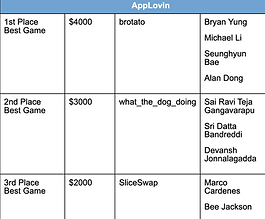

Marco served as a full-stack web developer and musician while I focused on developing the lightweight mosaic-ing algorithms and tile manipulation (as well as some of the home page UI).
Scan the QR Code with your mobile device to try it out! Upload an image and then tap to swap tiles to solve the puzzle! Surprisingly, this gameplay loop has not yet been explored in other apps and is very addictive... press the "Show differences" button if you get stuck!

I have had the great pleasure of taking many Creative Coding classes (on top of my CS core) with Golan Levin, whose tone and flow field lectures were particularly inspirational in constructing the mosaic-ing pipeline (canny edge detection -> flow fields -> weighted seeding -> voronoi).
Other Projects
Smaller/older projects from the past few years.

ASCII MADNESS - Fall '23
ASCII Madness was the first videogame I ever completed. It was a submission for 15-112's Python term project competition in fall 2023 and was the only one out of 600 submissions to receive the "Legendary" award from the professor. Unfortunately it was built with the py-game esque "CMU-graphics" package which is difficult to install now, but here is the original code by me and a mod created by a friend (for anyone who enjoyed the original).

Hero's Gambit - Summer '24
A 2D videogame created with the Godot game engine that is the only unfinished project displayed on this page despite the 200+ hours of work put into its creation. I developed state machines for each enemy (and of course the player), the physics system, flocking for certain enemies, GLSL shaders, and also did all of the art/animation. No tutorials were used, all GDscript code was originally by me. I encourage you to watch the trailer here.
Scrap Drawing Machine - Fall '25
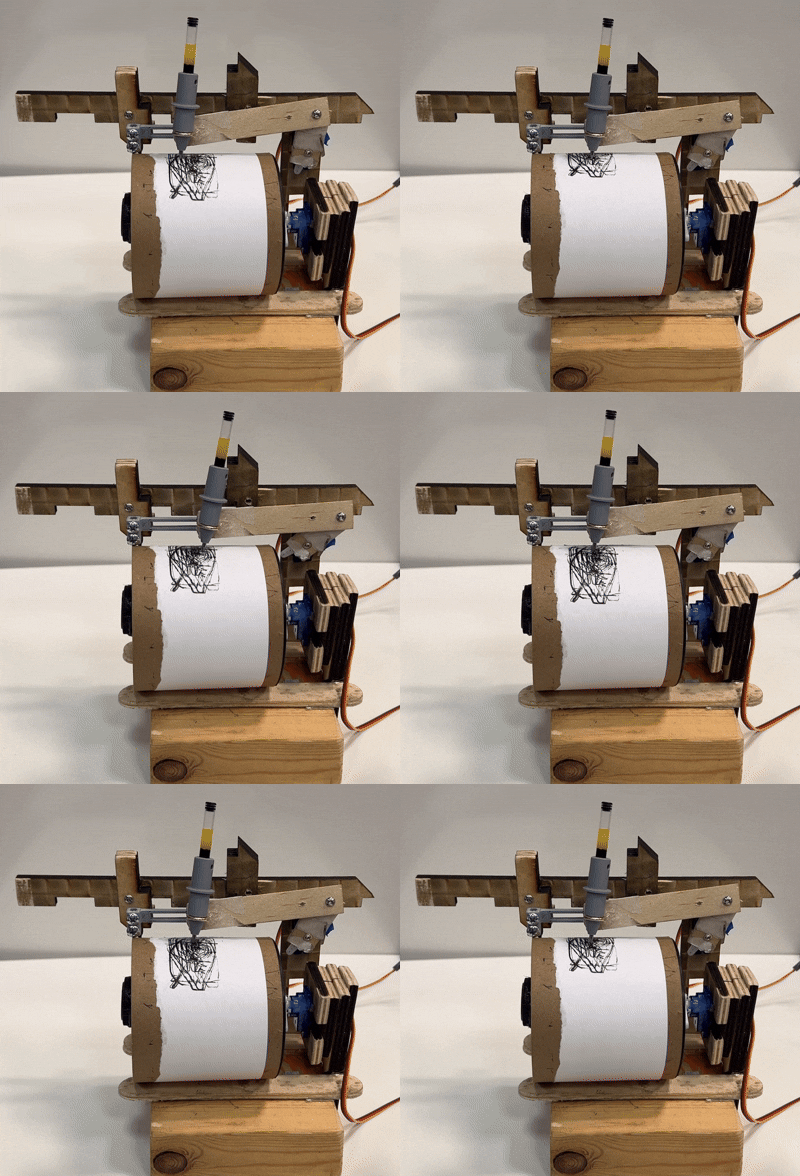
This drawing machine was built in a day out of trash scraps that I found lying around CMU's makerspaces. My favorite part is the tire from a toy car on the left of the rotating drum (this is because I used the shaft of a toy car to rotate the drum). It is able to take x-y coordinates and can draw any input image/SVG, albeit a bit shakily. The design is completely original and was inspired by the parts I was able to find (wire spool, scrap laser-cut wood, etc.).
RAM-SCRAPER - Spring '24
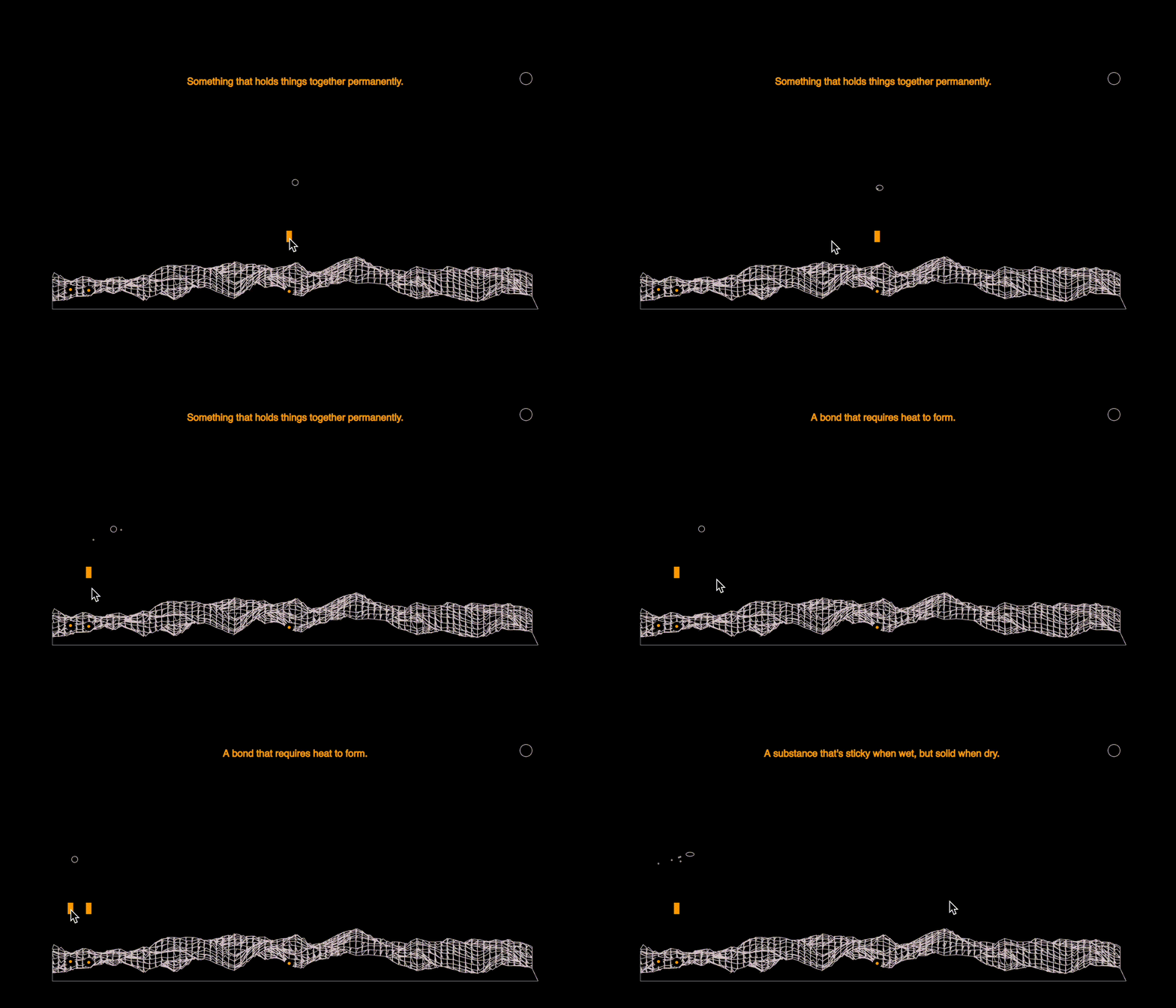
A simple Wordle-style game created in p5js where the player is playing as a ram-scraping virus that has to guess what data was previously stored in this "chunk" of memory. It prompted Google's Gemini API to generate riddles for the selected word, however the version used is now deprecated so the game has become unplayable. I was inspired to create this because I was taking a systems class for my CS core at the time. It was very popular among my classmates while it was up!

Turing Machine Tracery - Fall '25
A simple Javascript application that takes in the formal representation of a turing machine (set of states, input alphabet, tape alphabet, transition function, etc..) and produces an ornate rug design/tracery that encodes all of the relevant information of the turing machine. The above image is a representation of the TM solving the language of all unary strings with an even number of digits.
Hopefully in the future I will be able to use CMU's Jacquard loom to turn these patterns into actual rugs in an homage to two of the greatest stepping stones of CS.
HAND2HAND - Spring '24
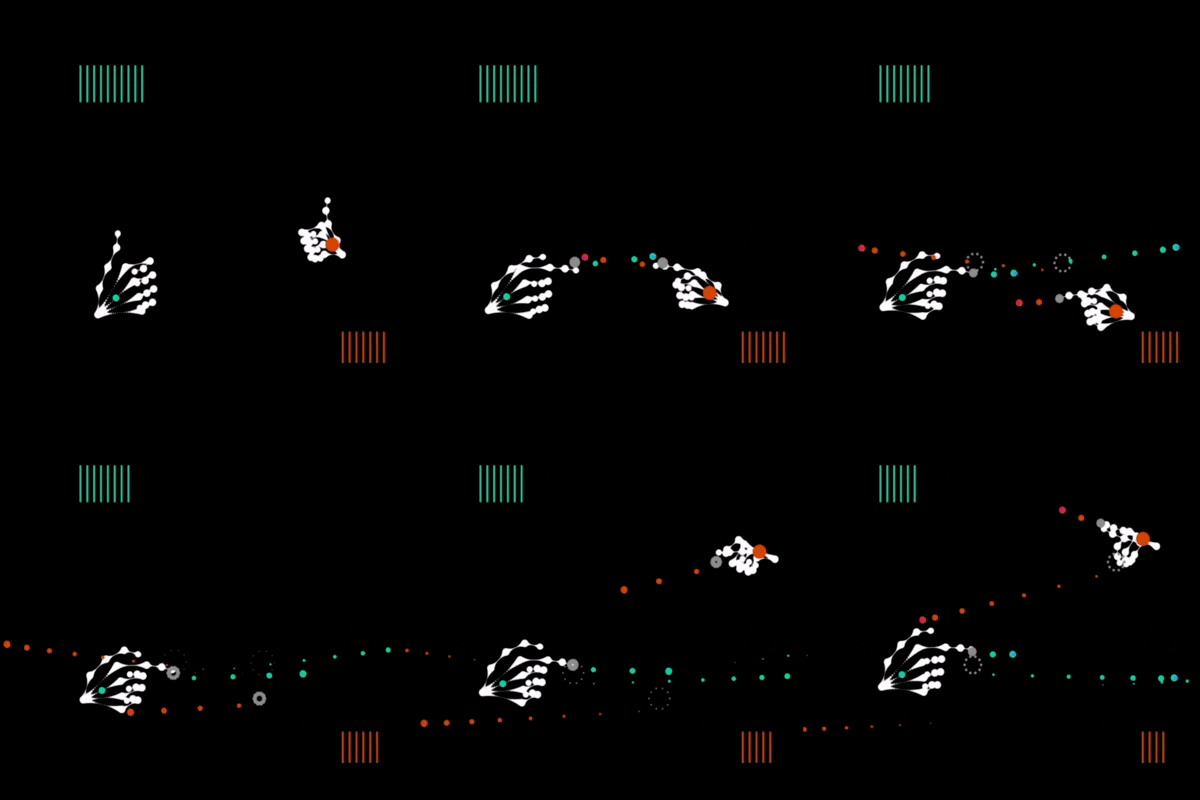
Another p5js game based on the childhood playground game "007" where players can choose to shoot, reload, or block on any turn. This is a fun, realtime based approach to the game that I made in a few hours as a response to a prompt for Golan Levin's Creating Coding course at CMU. I used his hand-tracking library for p5 and some linear algebra to process finger positions rather than training an entire model. The original game is unfortunately only accessible for CMU students however here is a reuploaded version. Not a gamer? Watch the trailer here.
Bean Bag Bot
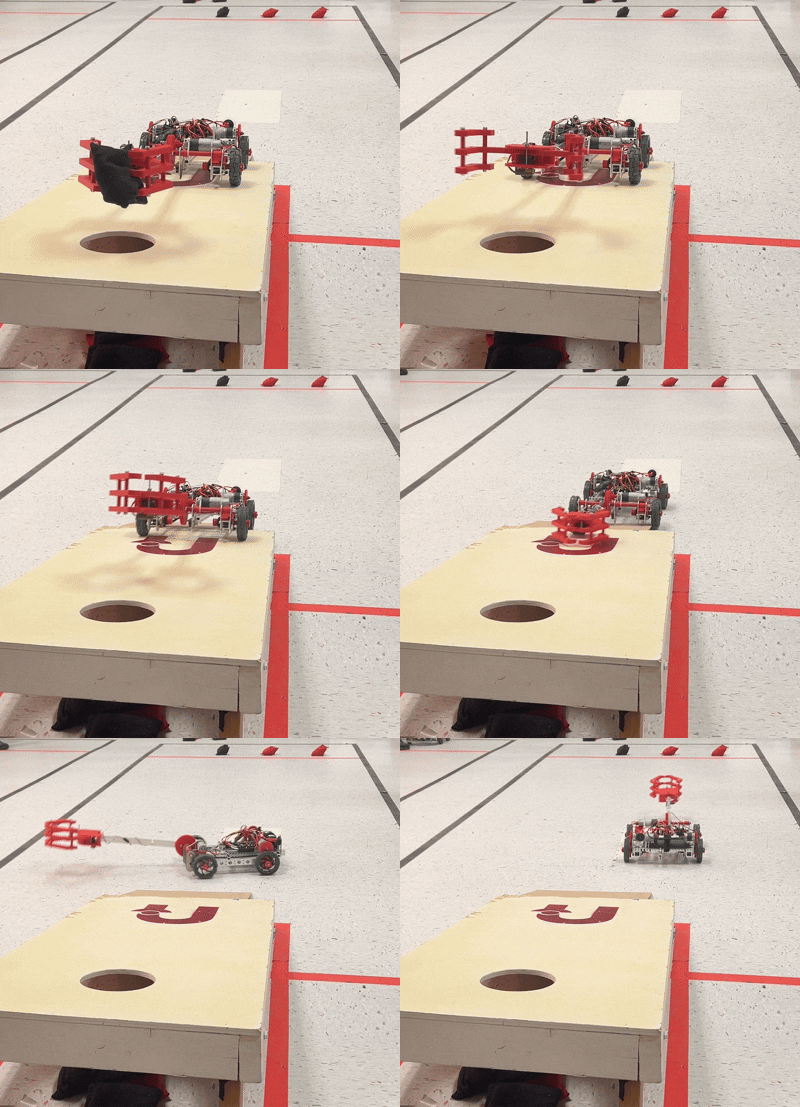
I designed, machined, and built this robot meant to score beanbags into a hole under timed testing conditions for 16-220 at CMU. I'm generally concerned with software in a lot of my classes/projects so it was insightful to approach this project with a focus on mechanical and physical properties of machines. After a lot of calculations and iterations, the final demonstration achieved a full performance score.


Early CAD of my original 4-bar based design.
Oct. 2025 - Dec. 2025